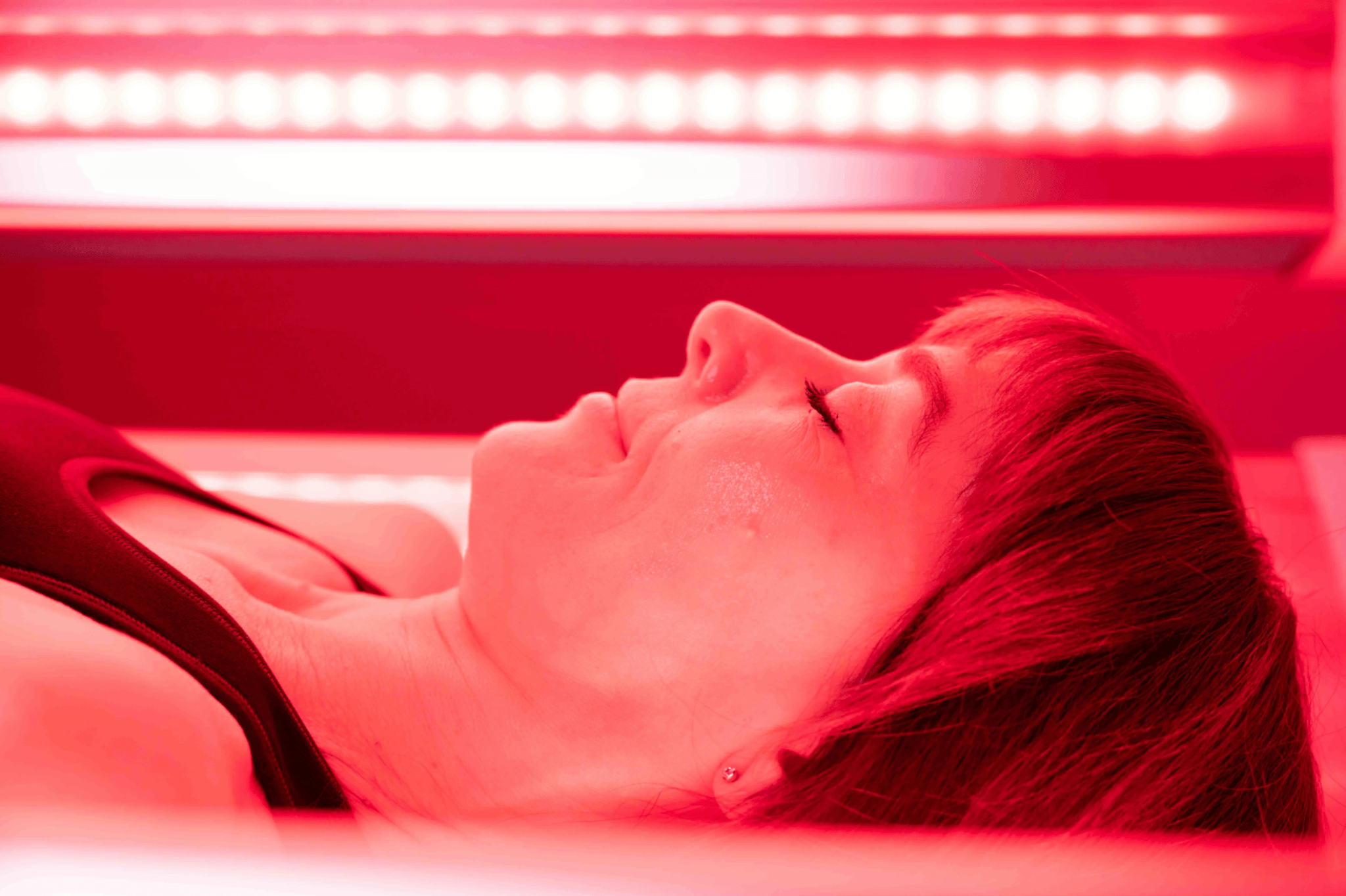
Let’s be clear from the start: we love red light therapy. At Biowell Health, it’s one of the treatments we believe in most. There is a growing body of evidence around red and near-infrared light therapy, often referred to as photobiomodulation. But, as with any technology, the details matter: wavelength, intensity, treatment time and the device itself can all influence the dose delivered. This isn’t a trend we roll our eyes at. It’s one we’ve built our practice around, because we know what it can do when it’s done right.
That’s the catch, though: when it’s done right. Red light therapy used to live in dermatology clinics and elite recovery labs. Now it lives on your nightstand. The at-home LED mask has become this decade’s jade roller: a nightly ritual, an Instagram prop, a promise of glowing, ten-years-younger skin while you scroll in bed.
But there’s a less glamorous story running alongside the glow-up, and it’s one of the reasons we take standards so seriously. The BBC has covered the boom in at-home LED masks, and right alongside it, a wave of bans from the Advertising Standards Authority, cracking down on the wilder claims mask brands have been making. The issue was never the light itself. It was everything around it.
A Boom Built on Borrowed Credibility
The appetite makes sense. The global LED mask market is worth hundreds of millions of pounds and growing fast. Recent ASA rulings have found a significant number of LED face masks being advertised with medicinal claims, such as claims relating to acne or rosacea, without evidence that the devices met the applicable UK medical-device requirements. Using AI to trawl social ads, the regulator has been scrutinising masks promising to “treat acne,” “heal rosacea,” or clear skin in weeks, complete with dramatic before-and-afters. These rulings weren’t a judgement on red light therapy as a whole. The issue was the specific medicinal claims being made and whether the devices met the applicable medical device requirements, alongside whether there was adequate evidence to substantiate those claims.
That’s not a technicality. It’s the gap between a device engineered and dosed to a real standard, and one built to hit a price point and a hashtag. It’s also exactly the gap we set out to close when we built Biowell.
Why the Light Alone Isn’t Enough
Here’s the part that actually matters: red and near-infrared therapy is all about dose. Wavelength, intensity, and treatment time all have to line up for anything to happen at a cellular level. Professional full-body systems and consumer LED masks can differ substantially in irradiance, wavelength, treatment area and recommended exposure time. That’s why we believe the specifications and protocol matter more than simply the number of LEDs. A device’s appearance or diode count alone tells you relatively little about the dose being delivered; wavelength, irradiance, coverage and treatment duration all need to be considered when comparing devices.
And more isn’t automatically better. A mask boasting extra bulbs or higher intensity isn’t a sign of quality; it can just as easily be a spec-sheet trick. What actually counts is accurate wavelength, even coverage, and a dose backed by real research, not marketing copy. It’s why we’re transparent about ours.
A premium price tag doesn’t necessarily mean a premium light dose. We’ve seen first-hand how difficult it can be for consumers to compare devices when important specifications aren’t clearly disclosed, and we increasingly meet clients who have invested significant amounts in consumer red-light devices without being given clear information about wavelength, irradiance or delivered dose.
The New Discernment
This is the shift happening across wellness right now. The question is no longer simply “does red light therapy work,” it’s “does this device work, and how.” And increasingly, answering that question means looking beyond aesthetics and marketing: at the device specifications, the evidence supporting the claims being made, and the regulatory requirements that apply. What the ASA’s rulings really expose is an industry moving faster than the rules built to police it, leaving people to do the vetting themselves.
Where We Set the Standard
We’re a biohacking and recovery destination at London’s Battersea Power Station, and this is the gap we built our name on closing. Instead of a mask shipped to your door with an unknown wavelength, we deliver red light therapy as a supervised, in-clinic treatment: our full-body red and near-infrared light systems, administered by trained health optimisers rather than an app.
Biowell is registered with and regulated by the Care Quality Commission (CQC) for regulated healthcare activities. We apply a safe and high quality focus on governance, consultation, training and safety across all our services.
That distinction is bigger than it sounds. A full-body system used under expert guidance in a private room is a different category of experience from a battery-powered mask of unknown strength bought online. Our dosage and exposure are considered and consistent. Every treatment follows a proper consultation. It’s the difference between wellness as guesswork and wellness as protocol.
It’s also the kind of transparency we welcome in our industry. Against a backdrop of increased regulatory scrutiny of the claims being made for consumer LED devices, our approach is science-led and clinically supported, with consultation, considered protocols and clear information about what the technology can and cannot reasonably be expected to do. Biowell is also CQC registered for healthcare activities. Loving red light therapy and demanding rigour around it aren’t opposing positions. For us, they’re the same one.
If you’re weighing us against a mask, ask the same questions either way: who’s administering this, what is it actually delivering, and is there a real standard behind the claim. If a device is being marketed with claims to treat a medical condition, check that it meets the applicable UK medical-device requirements. Whatever the intended use, look beyond diode count and ask about wavelength, irradiance, treatment area, exposure time and the evidence supporting the specific claims being made.
Research into red and near-infrared light therapy continues to develop. What the recent regulatory scrutiny has made particularly clear is that credibility depends not just on the technology itself, but on the evidence, specifications, protocols and standards behind the claims being made. Done thoughtfully and transparently, the way we believe it should be, the glow isn’t just a marketing promise. It’s something that should stand up to scrutiny.